


How one association’s deferred roof project turned into $135,000 of avoidable spending, and what boards can learn from it.
Every association board has had this conversation. The roofs are near the end of their life, the reserve study says replacement is due, and someone asks the reasonable question: can we get a few more years out of them?
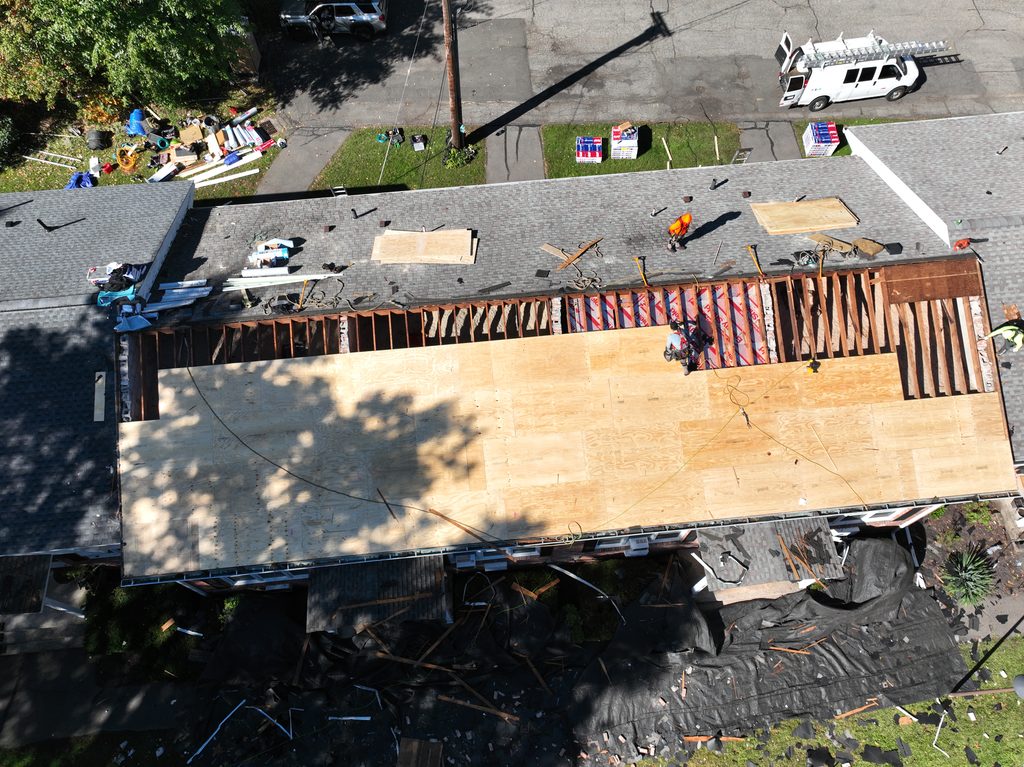
We recently managed a full roof replacement for an association that had deferred the project. The photo above tells the entire story. Instead of a straightforward tear-off and re-shingle, the roofers stripped this building down to the rafters and replaced the roof decking across the entire roof field.
What waiting actually cost
By the time the project moved forward, the association had already spent roughly $50,000 on remediation and rebuilding units after leaks. On top of that came about $5,000 in emergency tarping. It started with small tarps over problem spots. As the roofs got worse, the association ended up tarping every roof on all five buildings, at about $1,000 per building. None of that money improved the building. It only held the line.
Then came the largest hit. Years of water getting past worn shingles had damaged the plywood decking underneath. What should have been a shingle replacement became a full decking replacement, an estimated $80,000 that a timely replacement would likely have avoided.
In other words, delay didn’t save this association money. It cost it.
Why roofs get more expensive the longer you wait
A roof fails in stages, and each stage costs more than the last.
- Shingles wear out. Granules wash off, edges curl, and seals fail. At this point, replacement is mostly labor and materials for the top layer.
- Water gets underneath. Small leaks soak the decking, often without showing up inside right away.
- Decking rots or delaminates. Soft or damaged plywood can’t hold nails and has to be replaced before new shingles go on.
- Damage spreads inside. Ceilings, insulation, drywall, and sometimes framing need restoration. Emergency tarping and repeat service calls pile up.
A replacement done at stage one is a planned capital project. A replacement done at stage three or four is a planned project plus eating into the majority of contingency funds.
The same math applies to wood siding
Wood siding follows the same pattern. Paint and caulk are the first line of defense. When they’re deferred, moisture gets into the boards, then the sheathing, then the wall framing. A paint-and-repair cycle turns into board replacement, and board replacement can turn into structural repair. The longer siding work waits, the more of the wall you end up paying to rebuild.
What boards can do
- Treat the reserve study as a schedule, not a suggestion. If a component is due, plan for it or document why it’s safe to wait.
- Get an inspection before you defer. A roofer or engineer can tell you whether the decking is still sound. That one visit can be the difference between a delay that’s safe and one that’s expensive.
- Track reactive spending. Add up tarping, leak repairs, and interior restoration each year. When that number climbs, the case for replacement usually makes itself.
- Communicate the trade-off to owners. A special assessment is never popular, but owners respond better when they can see what waiting would cost.
The bottom line
Deferring a capital project can feel like the fiscally responsible choice. Often it’s the opposite. For this association, waiting turned a roof replacement into a roof replacement plus an estimated $135,000 in remediation, tarping, and decking work that never had to happen.
If your community has roofs or siding approaching the end of their life, talk with your manager about where they stand before the decision gets made for you.
Schedule a capital planning review →

Leave a reply