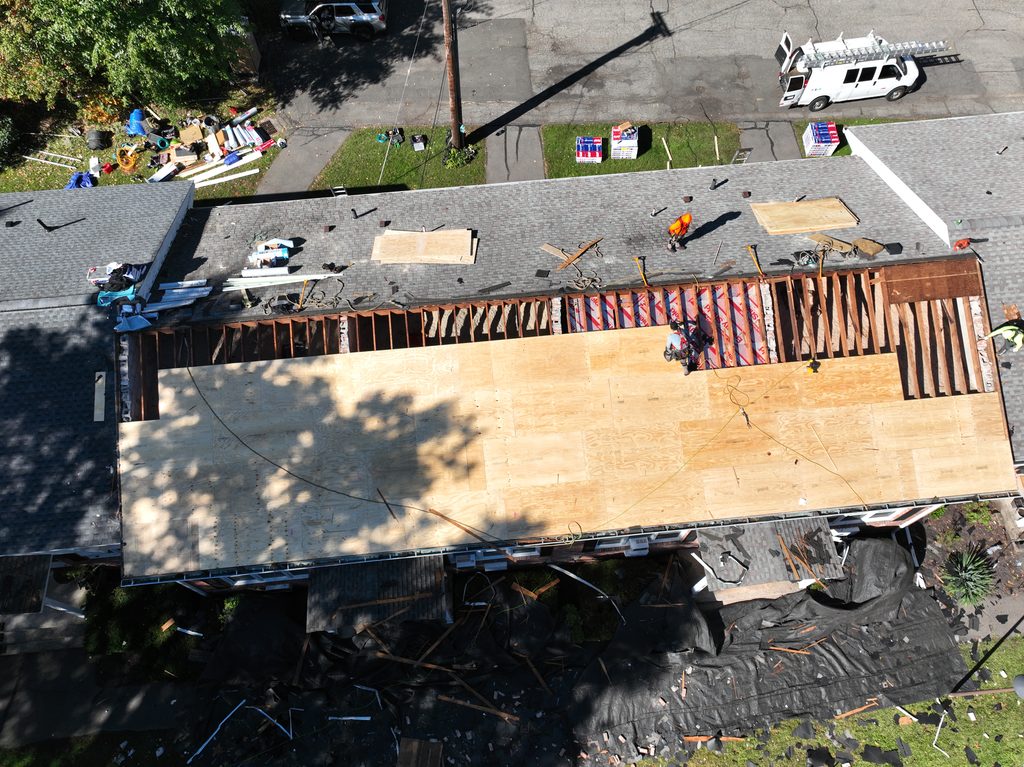
The Part of Your Roof Nobody Bids On
Why ventilation belongs in every roofing scope, and why most associations don’t know to ask.
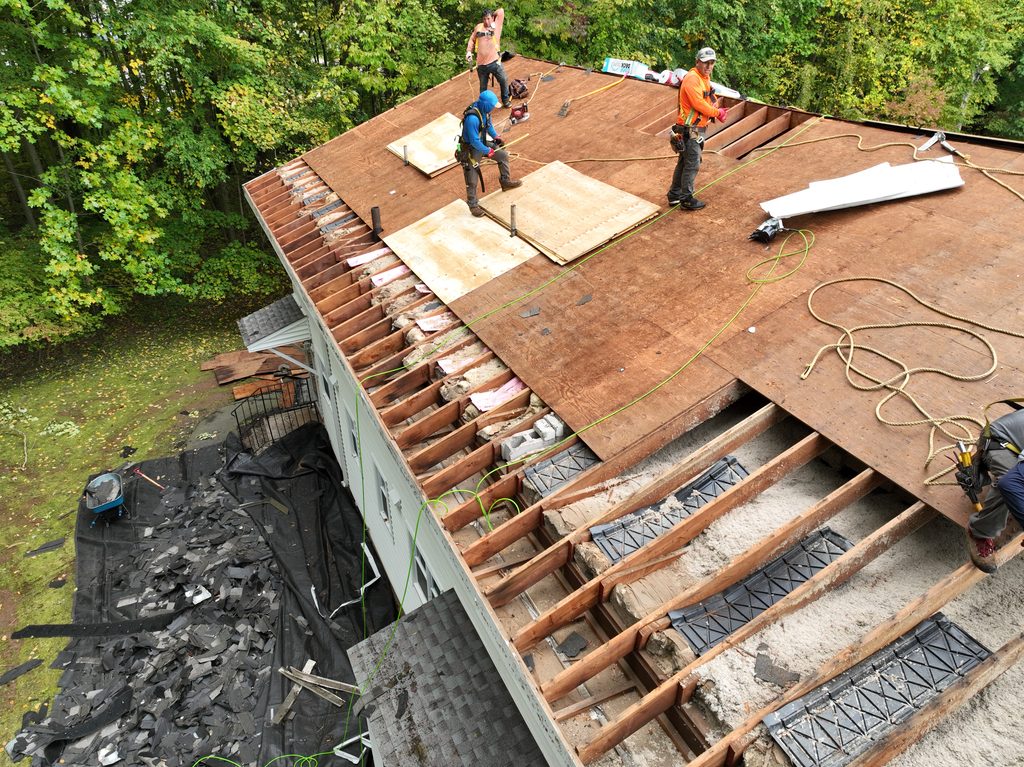
When an association replaces a roof, the conversation usually centers on what owners can see: shingle color, brand, warranty length, price per square. Those things matter, but some of the most important decisions on a roofing project happen in the part of the roof that is rarely looked at.
The photo above is a good example. With the decking stripped away, you can see what’s normally hidden: the rafters, the insulation, the channels at the eaves. That space has a job to do. Whether it does that job well is decided by the roofing scope, and in a lot of scopes it isn’t mentioned at all.
A roof is a system
Shingles are the surface. Underneath is a system that has to manage heat and moisture year round. When that system works, nobody notices. When it doesn’t, the problems tend to show up as something else entirely, which is why they’re so often misdiagnosed.
What poor ventilation can look like at an association:
- Ice dams along the eaves every winter
- Shingles curling, blistering, or wearing out years ahead of schedule
- Mold or staining on the underside of the decking
- Soft or delaminated decking discovered at the next tear-off
- Top-floor units that run hot in summer, with energy bills to match
- A warranty claim that gets denied
That last one surprises many boards. Shingle manufacturers generally expect the roof to be properly ventilated, and a ventilation problem can affect warranty coverage. A long warranty on paper is only as good as the installation behind it.
Why it gets left out
Ventilation rarely makes it into a scope for a simple reason: nobody at the table knows to put it there.
Many bids are written as a straight replacement of what’s already on the building. If the existing setup was wrong, a like-for-like bid repeats the mistake on a brand-new roof. Contractors bidding against each other on price have little reason to add scope nobody asked for. And board members, understandably, aren’t roofing experts.
The result is that three bids can look nearly identical and still deliver very different roofs.
Questions every board should be able to answer
Before approving a roofing contract, a board should be able to answer these:
- Has anyone evaluated whether the current attic ventilation is working?
- Does the scope say what will be done about ventilation, or is it silent?
- Are all the bids actually pricing the same system?
- Will the finished roof meet what the manufacturer expects for the full warranty?
- Who on our side is qualified to check?
If the honest answer to any of these is “we’re not sure,” that’s the gap.
A good scope is only half the job
Even the best scope is just a document. What protects the association is whether the roof that goes on actually matches it.
Once work starts, things come up. Conditions change when the old roof comes off. Change orders get proposed. Details that matter get rushed when nobody is watching. A scope can say all the right things and still not be followed.
That’s where the right management team comes in. Having someone on the association’s side means the right questions get asked before the work starts and keep getting asked until it’s finished: coordinating with the contractor, unit owners, and making sure the scope is followed.
The bottom line
A roof replacement is one of the largest checks an association will write. The difference between a roof that reaches its full life and one that fails early is often decided before the first shingle comes off, in a scope document most owners never read.
You don’t need to become a roofing expert. You need a management company that knows the right questions to ask, and stays on your side until the job is done right.
Planning a roof replacement? Make sure the scope covers the whole system.
Our team asks the right questions before a roofing scope goes out to bid, so ventilation isn’t an afterthought and every bid is pricing the same job. Then we stay on your side through completion, making sure what was promised is what gets built. Before your board signs a contract, let’s talk.